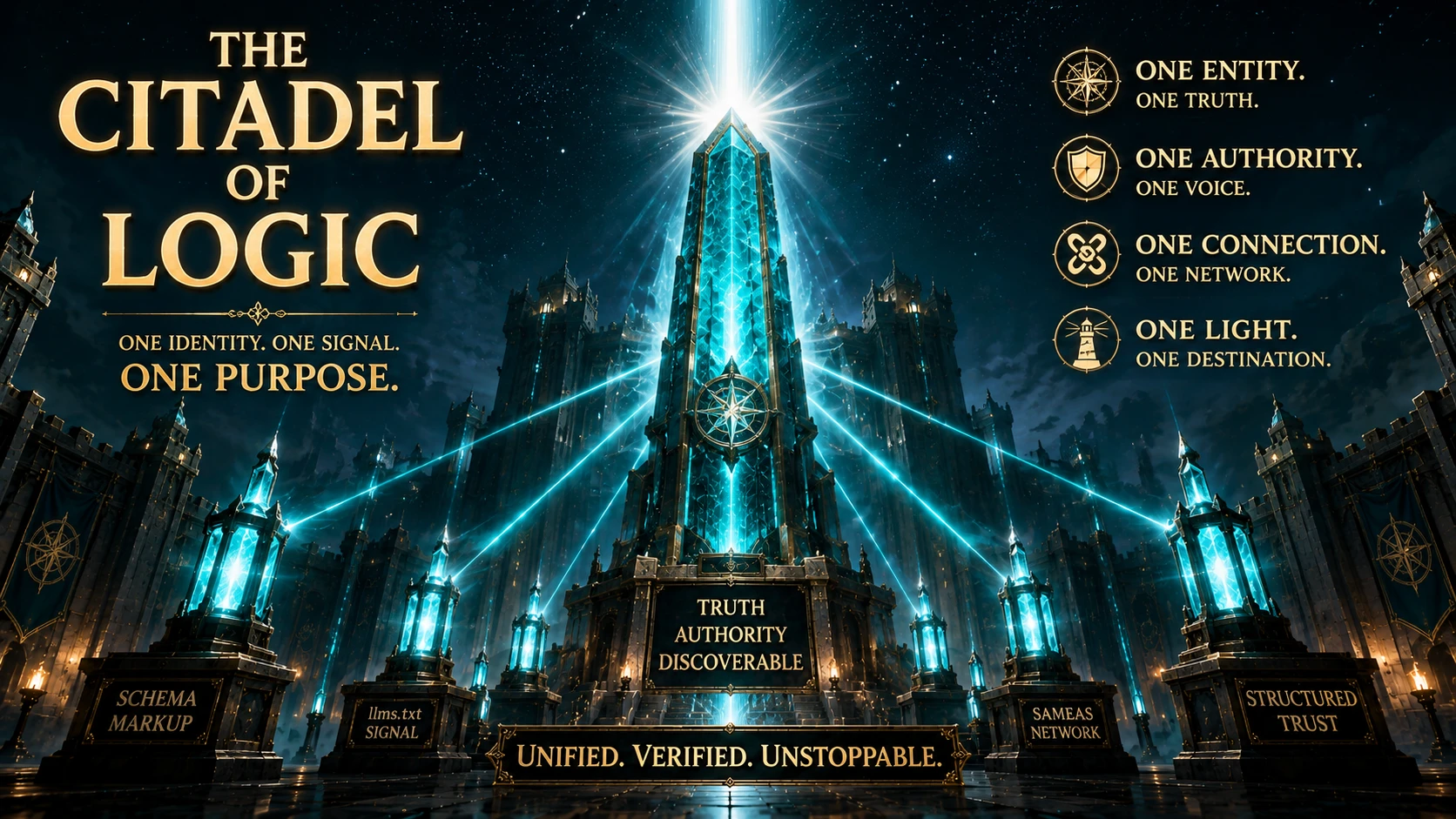
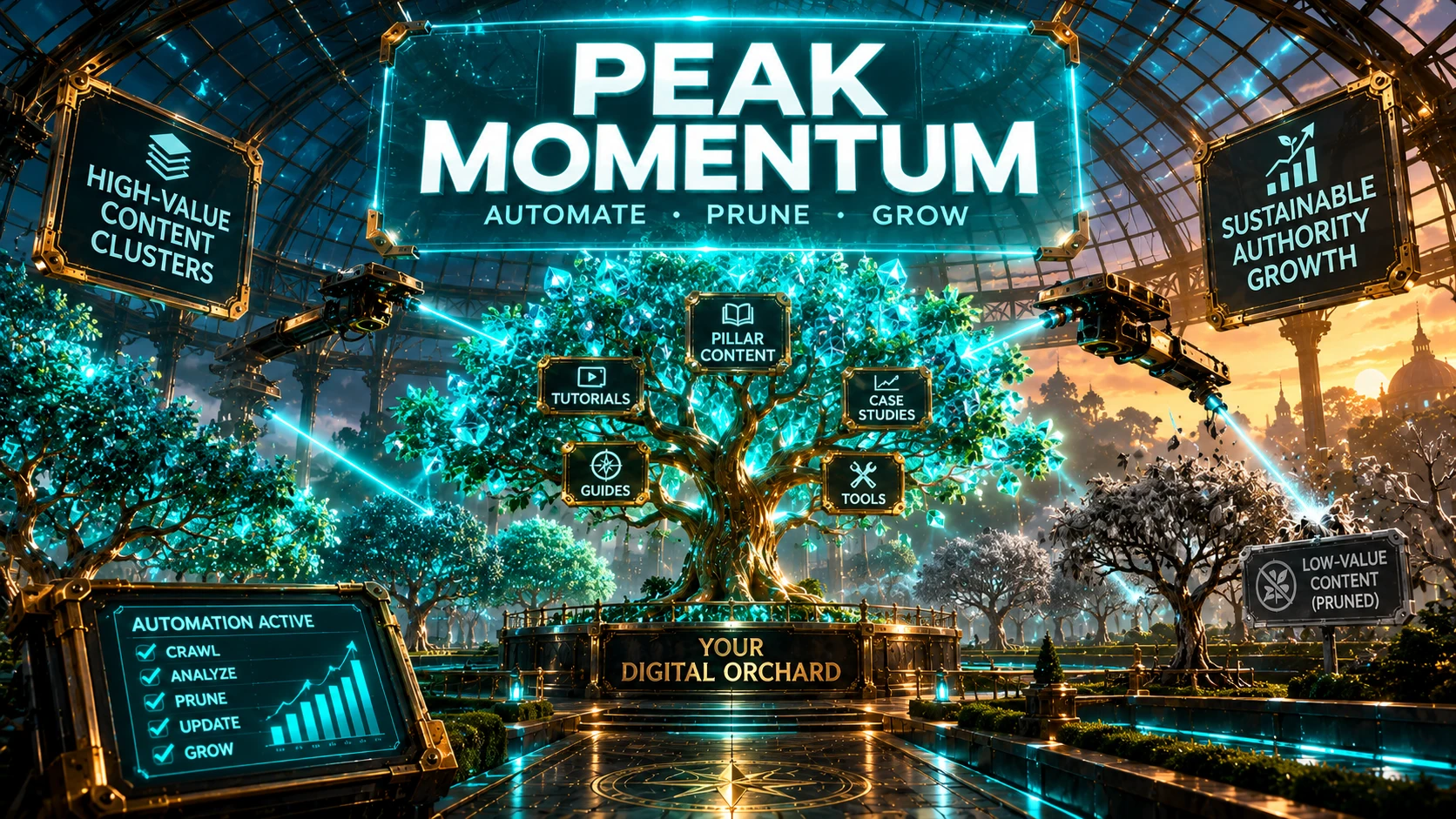
As your journey matures, you move beyond the shifting tides of discovery and enter the precision process of the digital age. Here, the raw materials of your expertise are refined into a smarter digital efficiency. To scale your influence in 2026, you must stop viewing your website as a collection of pages and start treating it as a unified entity—a machine-readable source of truth that provides its own proof of existence.
Key takeaway: Organization schema acts as a digital name tag that tells AI engines your brand is a legitimate entity rather than a low-confidence signal.

Disambiguation: Forging Your Digital Identity
In the AI-powered search landscape, ambiguity is the enemy of visibility. If your brand name is shared by a different company or a common keyword, AI engines like Perplexity or Claude might “hallucinate” or conflate your data with theirs. By implementing rigorous schema markup for AI visibility, you provide the “deterministic facts” that replace probabilistic guessing. [1]
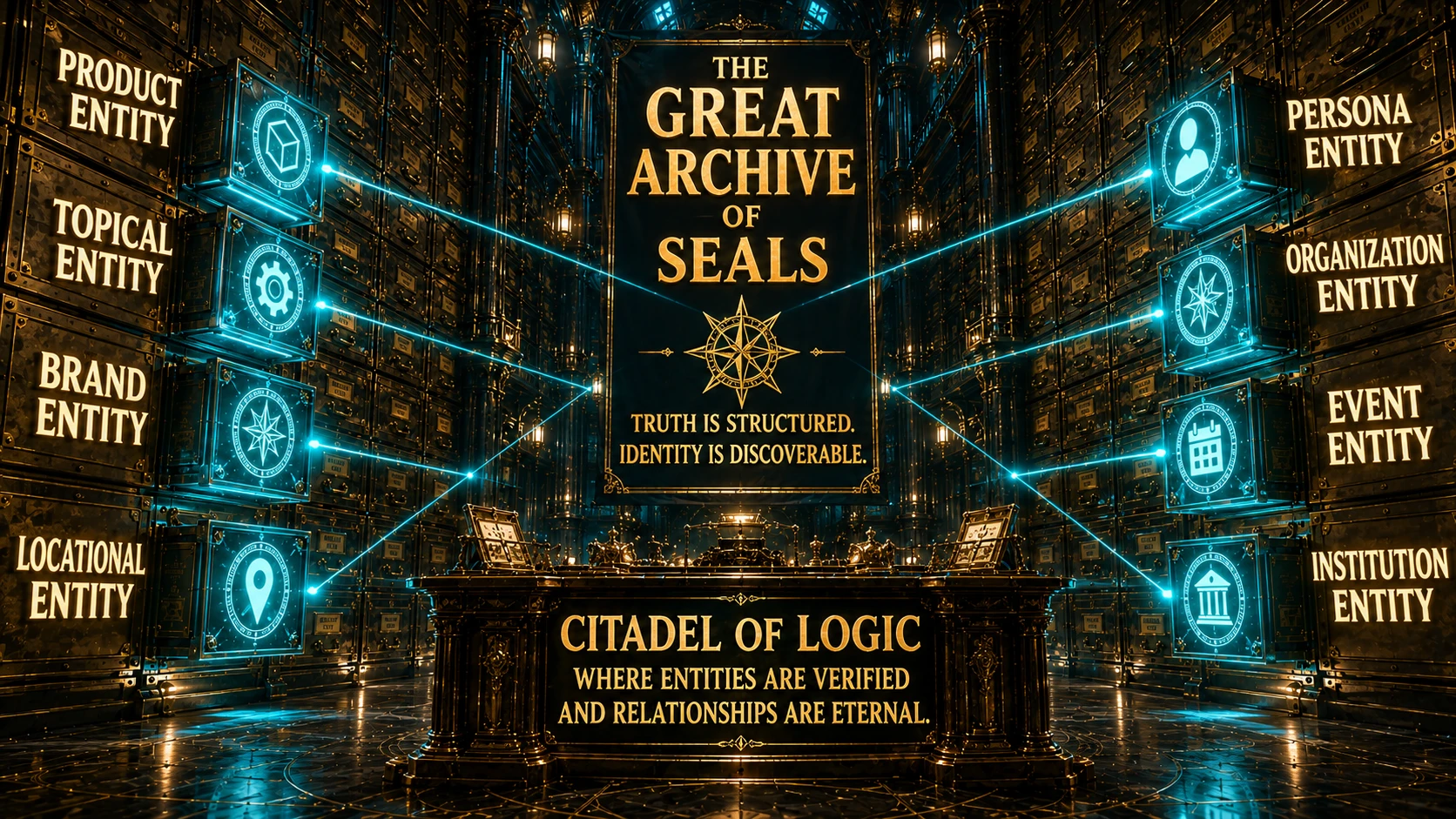
When your Organization Schema is deployed, you are essentially giving the AI a “Master Record” of who you are, what you do, and who you serve. [2] This process is the bedrock of optimizing for technical responsiveness, as it reduces the computational effort an AI bot must expend to identify your brand as the primary source of an answer.
Key takeaway: Rigorous schema implementation transforms your brand into an ‘API-able’ asset that AI agents can parse without reasoning effort.
The sameAs Array: Corroborating the Fleet’s Claims
True authority is never self-declared; it is verified. In 2026, the sameAs array in your JSON-LD is your most powerful tool for constructing a justification web. By linking your website to your LinkedIn company page, Wikipedia entry, and industry listings, you give the AI a list of corroborating references to cross-check against its training data. [3]
Entity Schema vs. Marketing Copy
| Feature | Traditional Marketing Copy | 2026 Entity Schema (JSON-LD) |
|---|---|---|
| Tone | Persuasive and Promotional | Factual and Definitional |
| Structure | Unstructured Prose | Structured JSON-LD Data |
| Audience | Human Emotional Triggers | AI Knowledge Graph Ingestion |
| Outcome | Brand Awareness | Entity Disambiguation & Trust |
Definitional Descriptions: Writing for Synthesis
One of the most common mistakes in modern search engine optimization is using marketing taglines in schema description fields. AI models favor definitional language they can extract and use verbatim. [4] Instead of saying you are the “leading provider,” your schema should state: “Bittbuzz is a digital marketing agency specializing in Generative-Engine Optimization for small businesses.”
By providing these “gold sentences,” you align your content with the smarter sitemaps used in the discovery loop, ensuring that when the AI synthesizes an answer about your brand, it uses your preferred terminology. [5]
Key takeaway: Replacing marketing taglines with factual, definitional language in your schema description significantly increases citation probability.

Summary: Building a Foundation of Verifiable Truth
To “Work Smarter” is to stop fighting the AI and start feeding it. When you automate your entity proof through schema, you move from the “blue link” lottery into the “Shortlist” of AI recommendations. This technical clarity is the final bridge required to position your brand as a step-by-step authority in the generative era.
As you refine your foundry, remember: the brand that is easiest to verify is the brand that is impossible to ignore.