Search engine optimization is the essential process of making your business easy to find when customers look for professional help online. For many years, this meant competing for a spot in a list of “blue links” on a search results page. However, the way people find information has undergone a fundamental shift. While traditional links remain important, millions of users now interact with Generative Search Engines. These are platforms like ChatGPT, Perplexity, and Google’s AI Mode that provide direct, written answers instead of just a list of websites.
To remain visible today, your business must evolve. You are no longer just trying to get a person to “click” a link; you are trying to be the trusted expert that these new search tools talk about and quote to their users. This guide will walk you through the new rules of visibility and show you how to ensure your brand is at the center of the modern search journey.
Key takeaway: To get found online today, you must ensure your brand is perceived as an authority that intelligent search interfaces can verify, trust, and recommend.

Expert insight: “The brands that win in 2026 are not the ones with the most links — they are the ones with the most verifiable facts. AI search engines are looking for evidence, not popularity.” — Bittbuzz Strategy Team
Why the Rules of Getting Found Have Changed
To understand how to succeed in 2026, we must first understand how we got here. In the early days of the internet, search engines were simple. They looked for the exact words you typed. If your website mentioned a word more often than your competitor’s, you usually ranked higher. By 2010, the focus moved to “links.” If other websites linked to yours, search engines saw it as a vote of confidence [1].
Today, we have entered the era of Entity-Based Search. An “Entity” is simply a real-world thing, like your business. Modern search tools no longer just count words or links; they attempt to understand your business as a whole. They look for your reputation, your expertise, and how often people talk about you across the web [2].
This change is driven by a technology called BERT. While the name sounds complex, the concept is simple: it is a system that allows computers to understand the context of words in a sentence, much like a human does [3]. Because of this, search tools can now tell if you are a true expert or if you are just using the right keywords. If you are not seen as a trusted entity, you will be invisible to a large portion of your potential customers.
Your Roadmap to Modern Visibility
Because search tools now read and understand your content, your website must be organized in a way that provides “Justification.” This means you must provide proof for everything you say. A search tool is afraid of giving a user wrong information. If it cannot verify your facts, it will not recommend you.
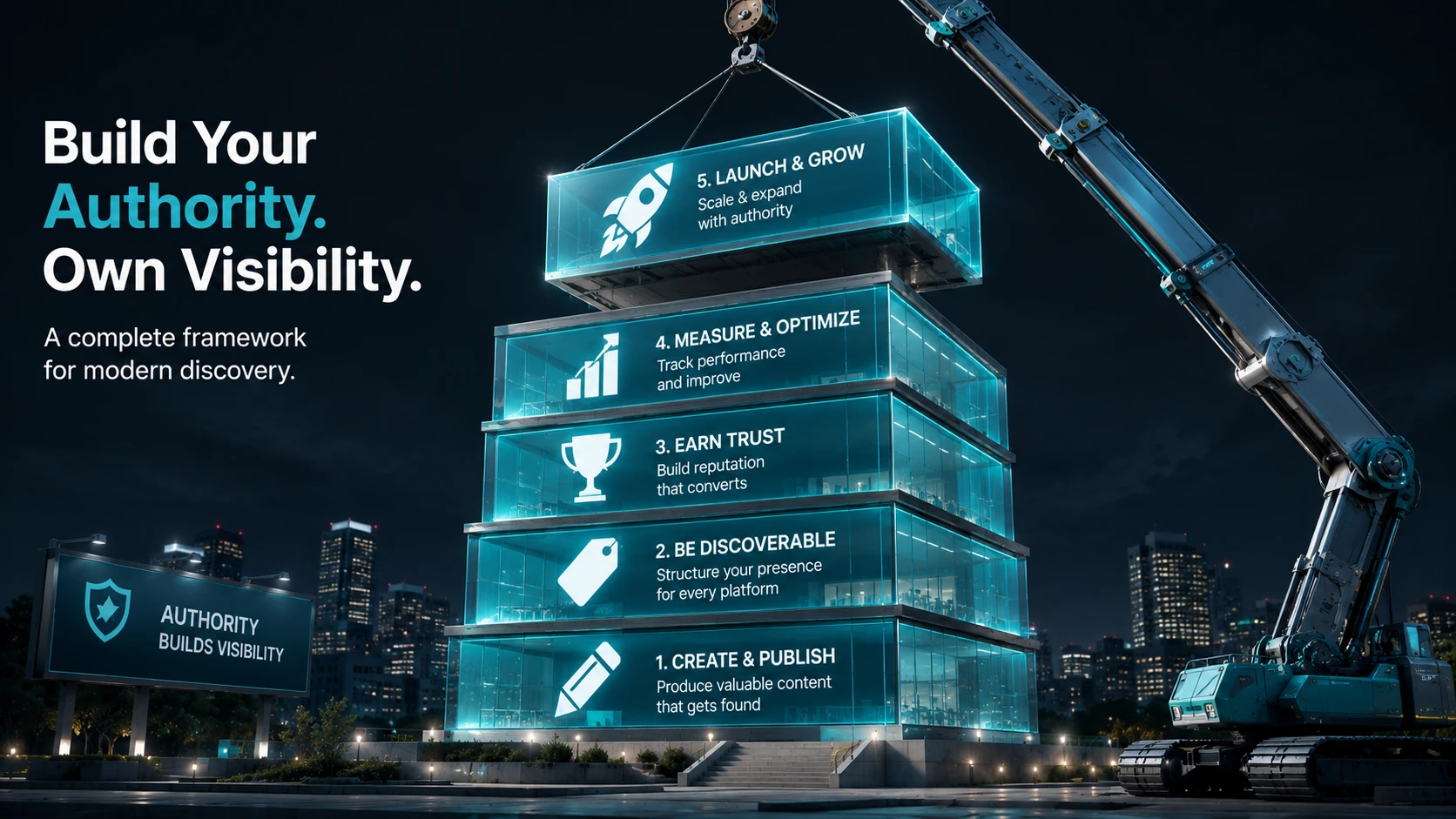
To help you navigate this, we have developed a five-step framework for modern visibility. This roadmap will move your website from a simple collection of pages to a “topical web” of authority that search tools will feel safe citing.
- Writing for Clarity: Making your information easy to quote.
- Digital Labels: Organizing your site like a professional library.
- Reputation Building: Proving your authority through mentions.
- Data-Driven Proof: Using numbers to build trust.
- Momentum: Winning the “Striking Distance” pages.
Step 1: Engineering for Citation Readiness
The most significant hurdle for many businesses is “throat-clearing.” This is a term from professional writing that describes long, vague introductions that delay the actual answer. If your website starts with a sentence like “In the fast-moving world of today’s digital landscape…”, a search tool will find it difficult to summarize.
To be cited by a Generative Search Engine, your content must be direct. We use a technique called the 40-word lead. This means every important section of your site should begin with a concise, 40-word summary that answers the primary question of that page.
Why this works: When a search tool like ChatGPT looks for an answer, it searches for a “Gold Sentence”—a clear, factual claim it can lift and show to the user. By providing these summaries, you make it easy for the tool to quote you. You can see exactly how to do this in our detailed guide on how short answers help your business.
Key takeaway: Providing clear, factual claims in the first 40 words of your content allows intelligent search interfaces to cite and attribute your brand more frequently.
Step 2: Establishing a Technical Bedrock
While the way you write is for the human reader, the way you organize your site is for the search tool. Imagine a library where the books have no titles on their spines. You would never find what you need. Most websites are like this to a search bot; they see the text, but they don’t know what is a price, what is an address, and what is a review.
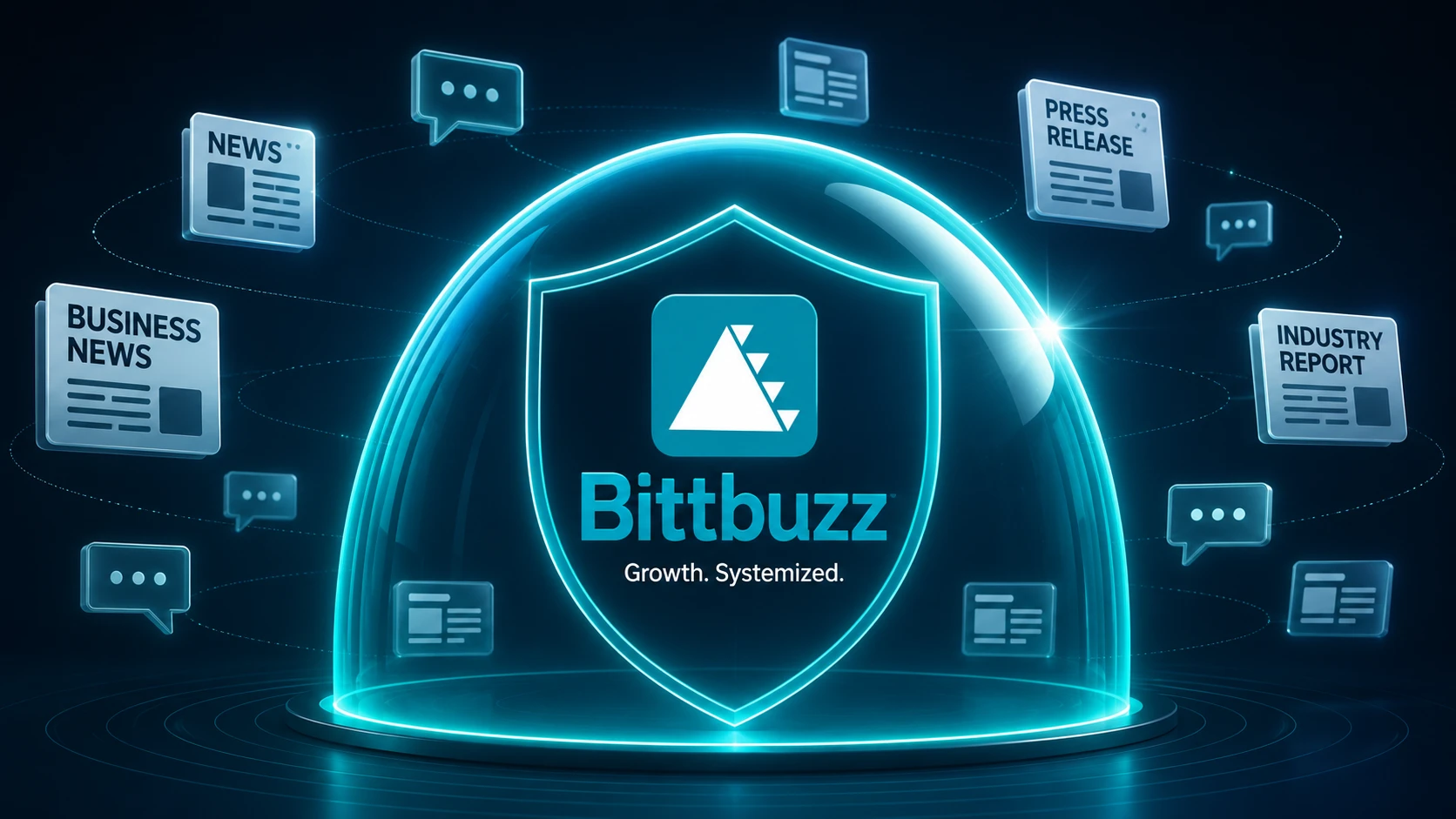
We fix this by using Schema.org. These are digital labels that you attach to your information. They act as a “name tag” for your data. For example, when you label your “Frequently Asked Questions,” you are telling the search tool: “Here is the exact answer to a common customer question.”
By using these labels, you help the search tool build a Knowledge Graph about your business [4]. This is a map of verified facts that the tool uses to prove you are a real, legitimate entity. A well-organized site can see a 15% increase in traffic simply because it is easier for the AI to trust [5]. Learn how to set this up in our simple guide to website organization. For a deeper understanding of how technical speed affects AI trust and crawl frequency, read our piece on the responsiveness signal.
Step 3: Building Authority through Brand Mentions
In the modern search era, your reputation is your most powerful ranking signal. Search tools look for E-E-A-T (Experience, Expertise, Authoritativeness, and Trustworthiness) to decide who is a real expert [6].
One of the strongest signals of authority is the Brand Mention. This happens whenever your business is talked about on a news site, a local forum, or a professional review platform, even if there is no link back to your site [7]. When a search tool sees your brand name appearing in expert discussions, it records your business as a leader in that field.
This is why we focus on “Brand Consistency.” Your business name, address, and phone number must be identical everywhere online. This is the foundation of trust. We explain the shift from links to mentions in our guide on why brand authority matters more than links now.

Step 4: Leveraging Freshness and Real Data
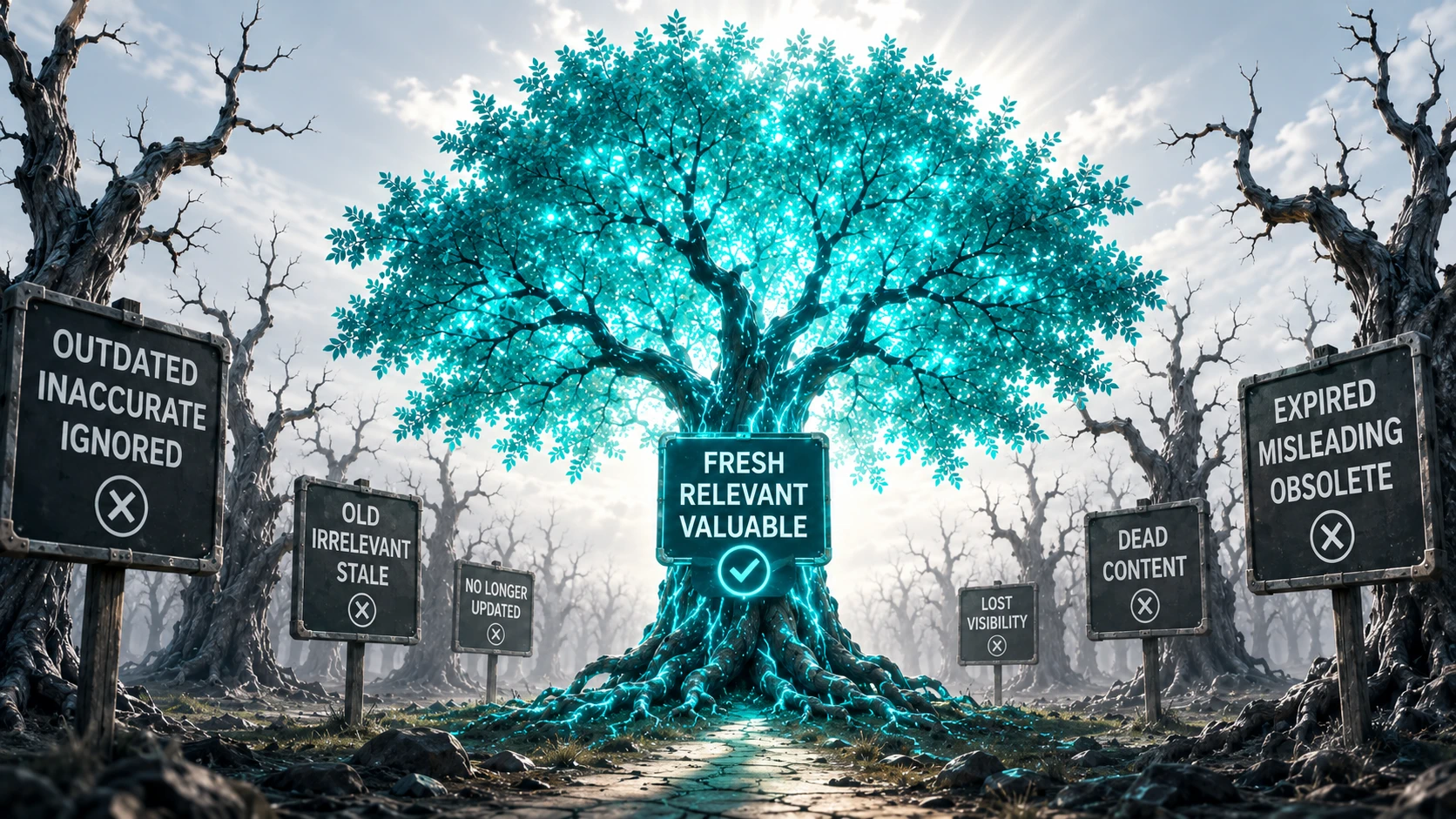
Generative search engines have a strong bias toward Freshness. They are programmed to avoid old information [8]. If your content is dated “2023” in a 2026 world, it will likely be skipped in favor of a competitor who provides current, dated facts. We cover this strategy in depth in our guide on Keeping Your Website Fresh for 2026.
Including real numbers and original statistics also makes your brand significantly more citable. For example, instead of saying “Many businesses trust us,” say “As of June 2026, 412 local businesses have used our system.” Search tools love numbers because they act as “justification attributes”—concrete facts they can use to support their answers [9]. Adding real statistics can boost your visibility by 40% [10].

Step 5: Winning the “Striking Distance” pages
For many businesses, the fastest path to success is focusing on pages that are in Striking Distance. These are pages that already rank in positions 4 through 15 on Google. They are close to the top but haven’t yet secured a citation in the AI layer.
By applying the steps in this guide—adding a 40-word lead and updating your freshness dates—these authoritative pages can often jump to the top of search answers in under 60 days. This creates a “competitive moat,” making it very difficult for competitors to displace your brand because you have become the “primary source” for that topic.
Conclusion: Preparing for the Future of Search
Modern search engine optimization is no longer a task you complete once and forget. It is a continuous process of demonstrating that you are a helpful, organized, and honest expert. As the internet moves closer to Intelligent Search, the businesses that succeed will be those that make themselves easy for AI to verify and quote.
At Bittbuzz, we specialize in helping small-to-medium businesses navigate this shift. We don’t just help you “rank”—we help you become the authority that the modern search landscape depends on.
Immediate steps for your business:
- Audit your current visibility to see how AI search surfaces perceive your brand.
- Identify your top 20 “Striking Distance” pages and apply the 40-word lead rewrite.
- Implement Schema.org labels to ensure your information is citation-ready.
To continue building your authority, we recommend exploring our full library of modern visibility guides and growth pillars:
- How to Organize Your Website for AI — Build your technical foundation with structured data.
- Why Brand Reputation Matters More Than Links — Master the shift from backlinks to brand authority.
- How to Use Customer Reviews for Better Visibility — Turn feedback into AI recommendation fuel.
- Local Search vs AI Answers — Navigate the changing local discovery landscape.
- Keeping Your Website Fresh for 2026 — Maintain the freshness signals AI tools demand.
- The Shift from Clicks to Direct Answers — Adapt to the zero-click search revolution.
- Capture & Book More Customers: The Complete Guide to Conversion — Turn visibility into bookings with proven conversion strategies.
- Work Smarter: Leveraging Efficiency for Scale — Automate and streamline your operations for sustainable growth.
- Build Trust: Securing Your Digital Legacy — Dominate AI answers through proactive reputation management.