For nearly two decades, the success of a digital marketing strategy was measured by a single metric: the number of links pointing back to a website. In that era, the internet functioned as a popularity contest where each link acted as a vote. However, as we explored in our foundational guide to modern search, the arrival of Generative Search Engines has fundamentally altered these rules.
In 2026, the way you are talked about online—your brand reputation—has become significantly more important than the simple collection of digital links [1]. Modern search systems no longer rely solely on a crawler to follow a path from one site to another. Instead, they utilize Intelligent Search Interfaces to synthesize information from across the entire web, evaluating your business as a real-world entity with a verifiable reputation. To stay visible today, you must move beyond the “Blue Link” mentality and focus on building a brand that people and AI both trust.
Key takeaway: Digital visibility is shifting from a numbers game of links to a verification game of reputation and authority.

The Decline of the Traditional Link Model
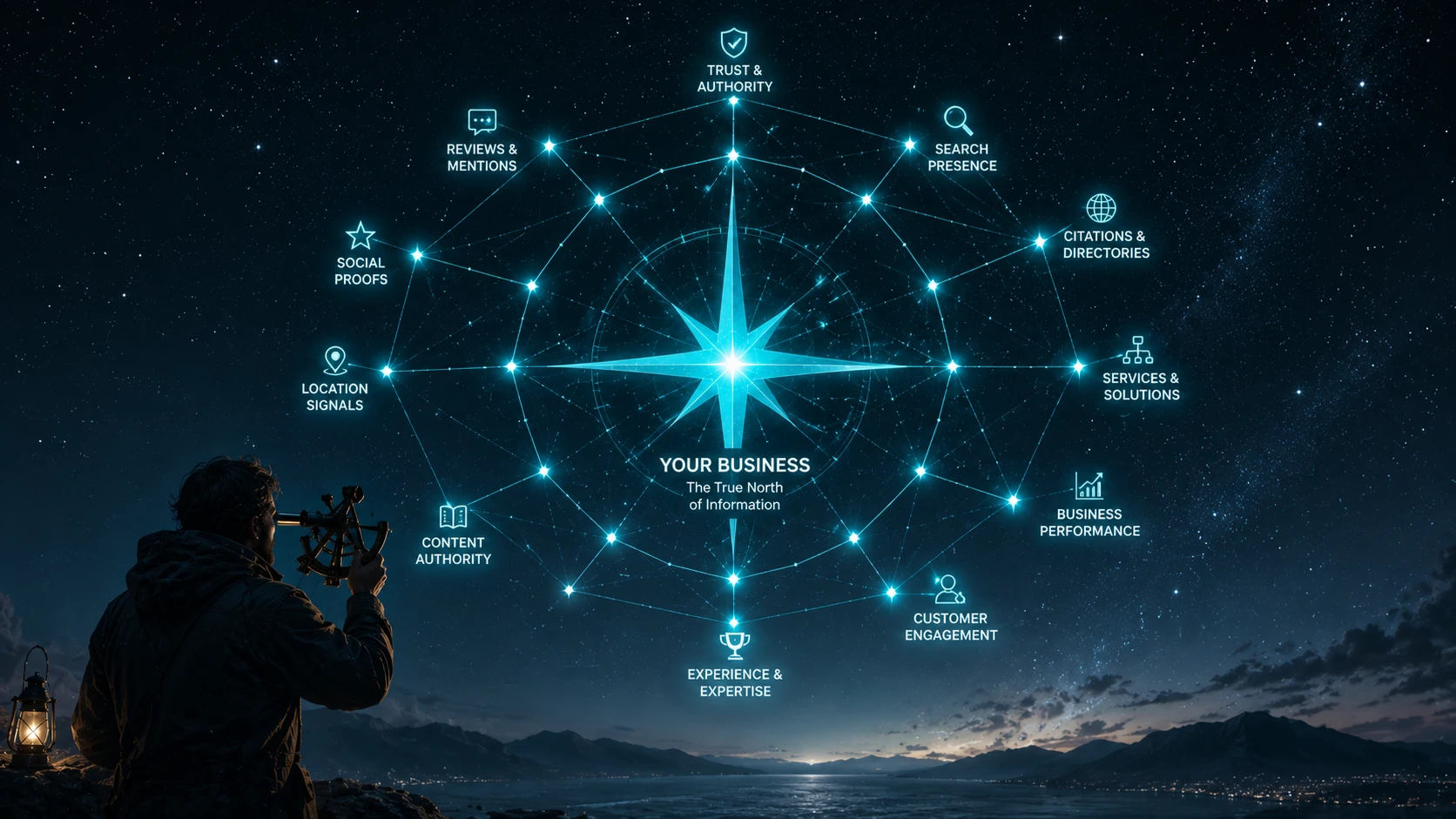
The transition away from traditional link-building is a response to years of manipulation. In the past, it was possible for a business to artificially inflate its ranking by purchasing links. Because of this, search engines have evolved to prioritize Brand Signals [2]. A brand signal is a verifiable indication that a company is not just a collection of keywords, but a legitimate leader in its industry.
One of the most powerful signals recognized by modern search surfaces is the Unlinked Mention [3]. This occurs when your brand is discussed on a reputable news site, a popular industry blog, or a local community forum without a direct hyperlink back to your site. While traditional SEO might have viewed these as “missed opportunities,” Generative Search Engines see them as unbiased endorsements. If an authoritative source talks about Bittbuzz as an expert in visibility, the search system records that expertise regardless of whether a link was provided.
The context of these mentions is now more critical than the link itself [4]. AI models analyze the sentiment and the surrounding text to determine if your business is being recommended for a specific service. This directly influences whether you are cited in a user’s summarized answer.
How AI Interfaces Verify Your Authority
When a customer asks an Intelligent Search Interface for a recommendation, the system performs a “reputation check” in real-time. It looks for what researchers call Justification Assets—the proof points that justify why your business should be at the top of the list.
These assets include:
- Identity Consistency: Is your business name, address, and phone number (NAP) identical across every platform? As we discussed in our guide to technical website organization, even a small discrepancy can cause an AI model to lose confidence in your data.
- Reputation Density: How many different reputable sources are talking about you? A mention on a major regional newspaper or industry hub carries significant weight.
- Active Sentiment: What are people saying about you right now? Modern search surfaces prioritize “Freshness Signals,” meaning a positive review from yesterday is more valuable than old feedback from years ago. For a complete strategy on keeping your data current, see our guide on Keeping Your Website Fresh for 2026.
Key takeaway: AI systems do not just want to find you; they want to find proof that you are the most honest and expert choice for their users.

The Role of Customer Reviews in the AI Funnel
In 2026, customer reviews have evolved into the primary “fuel” for search visibility. When an AI search surface generates an answer about your services, it often uses the text of your reviews to describe your business. If several customers have written that a business “finished the project ahead of schedule,” the AI will synthesize that into its response, telling the user: “Customers consistently report that this business delivers projects ahead of schedule with exceptional attention to detail and clear communication throughout.” This demonstrates the impact of linguistic fuel on brand trust.
This is why we focus on Review Momentum. A steady stream of new, detailed reviews provides the data that Intelligent Search Interfaces need to categorize your expertise. We recommend implementing automated systems to ensure that every happy client has an easy path to share their experience on the platforms that matter most to search bots.
| Performance Signal | Impact on Traditional SEO | Impact on Modern Search (AI) |
|---|---|---|
| Backlink Count | High: Drives PageRank | Low: Easily manipulated |
| Brand Mentions | Medium: Indirect benefit | High: Proves topical authority |
| Review Velocity | Low: Local only | High: Fuels summarized answers |
| Data Consistency | Medium: Helps local maps | Critical: Verifies entity identity |
Building a “Competitive Moat” through E-E-A-T
To dominate the modern search landscape, your business must demonstrate E-E-A-T (Experience, Expertise, Authoritativeness, and Trustworthiness) [5]. This is not a “hack” or a shortcut; it is a long-term strategy of proving your value to both humans and machines.
We recommend building your authority through three specific actions:
- Contribute to Expert Discussions: Engage in professional forums and news sites. These create the “Entity Signals” that AI engines use to map your brand to specific expertise.
- Publish Original Data: Adding proprietary statistics and citations to your content can boost your visibility by 40% [6]. When you are the source of the data, everyone else has to cite you.
- Secure High-Value Citations: Focus on being listed in authoritative directories and industry knowledge bases. These serve as the primary sources for many generative answers.
Conclusion: The New Metric of Success
Online visibility has moved past the era of “tricking” a search engine with keywords and links. In the world of Intelligent Search Interfaces, the most successful businesses will be those that are perceived as the most reliable. Success is no longer just about getting a “click” to your website; it is about being the brand that the AI chooses to name and quote in its final answer.
At Bittbuzz, we specialize in helping small-to-medium businesses navigate this shift. We don’t just help you “rank”—we help you become the authority that the machines trust and recommend. By combining technical precision with a strong reputation strategy, we ensure your business remains at the center of the modern search journey.
Immediate steps for your brand:
- Audit your brand mentions to ensure your information is consistent everywhere.
- Implement an automated system to increase your review velocity.
- Focus your content strategy on providing clear, citation-ready expertise.
To continue your journey toward total online visibility, we recommend exploring our guide on how to use customer reviews for better visibility.