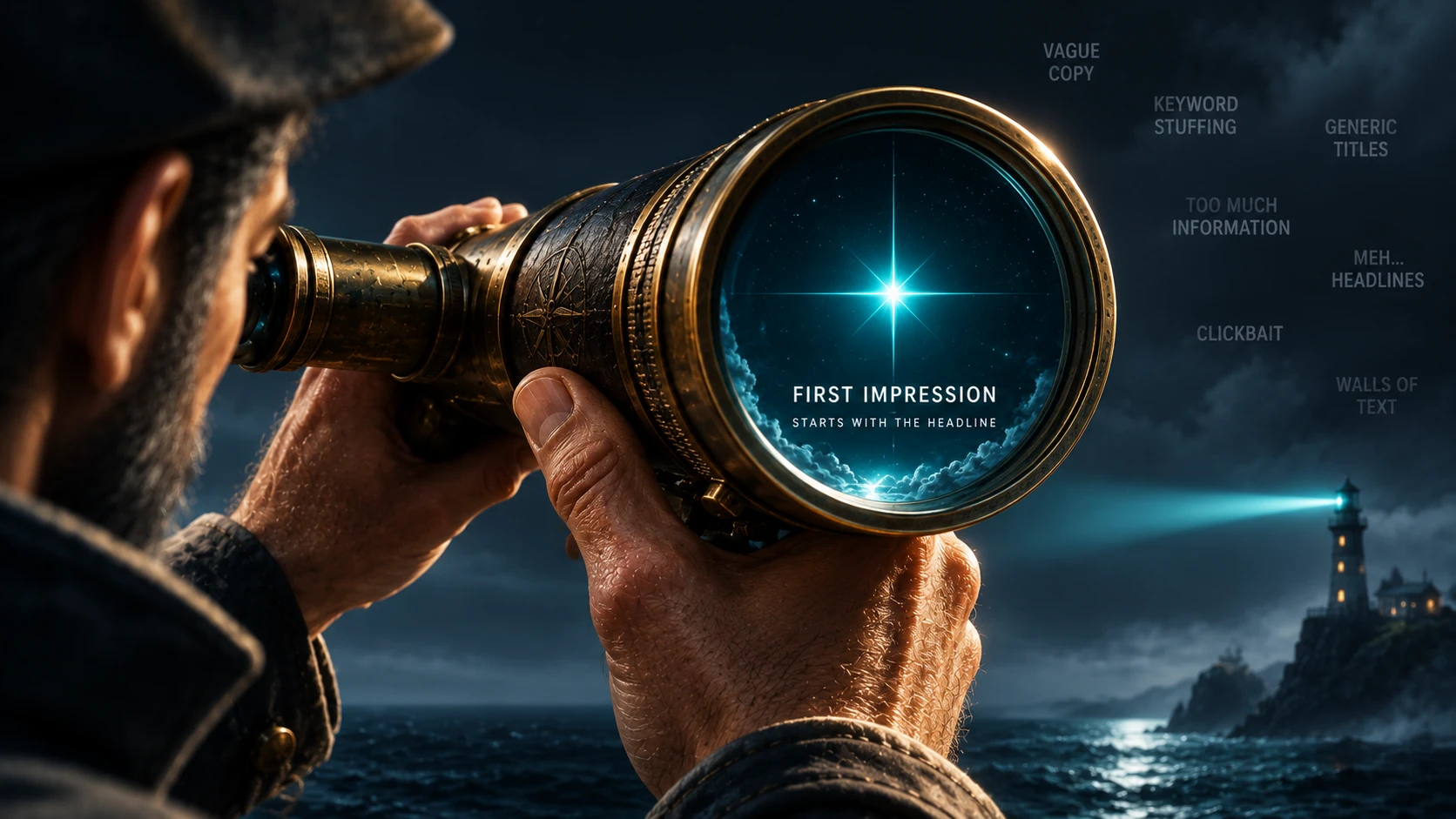
In our foundational guide to modern search, we detailed how to ensure your business is found by the world’s most advanced search systems. However, being “found” is only the first step of the journey. In the professional world of 2026, visibility without conversion is a wasted investment. To grow, your brand must move beyond appearing in a list of results and become the expert that customers feel compelled to hire.
We have entered the era of the Intelligent Search Interface. Whether a customer finds you through a synthesized answer in ChatGPT or a traditional search on Google, they are looking for one thing: a reason to trust you. This guide will show you how to apply the “End-Result” principles of classic advertising to the digital landscape, turning your website into a high-performance engine for booking new business.
Key takeaway: High visibility gets you invited to the table, but high-conversion engineering is what closes the deal.
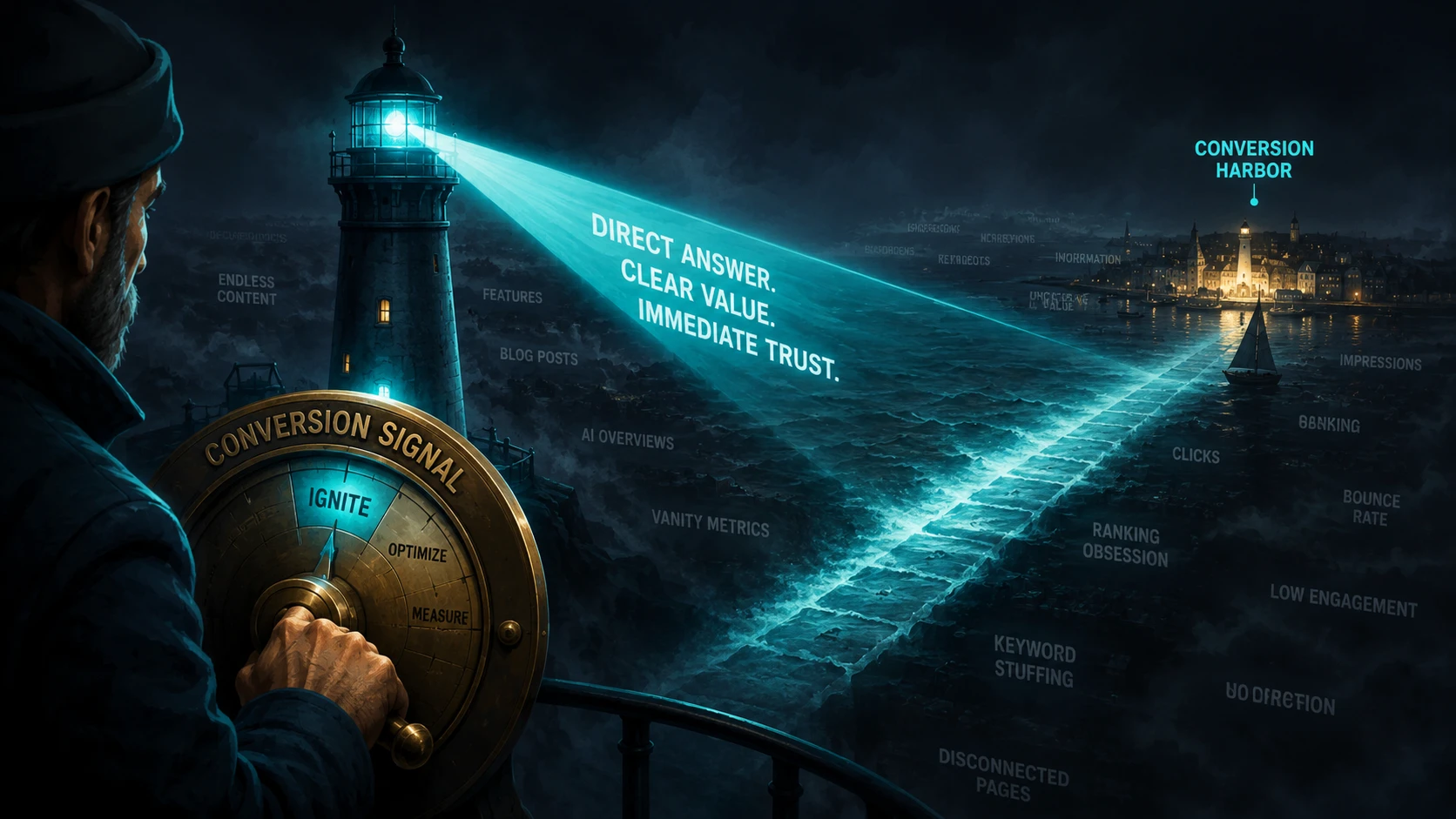
Expert insight: “Every extra step between a customer’s first visit and their booking is a step where you lose them. The businesses that convert best in 2026 are the ones that remove friction, not add features.” — Bittbuzz Conversion Team
The Psychology of the “Slippery Slide”
Great copywriters like Joe Sugarman often spoke about the “Slippery Slide.” The purpose of your first sentence is to get the reader to read the second sentence. The purpose of the second is to get them to the third, and so on, until they reach the final “Book Now” button.
In 2026, this slide is no longer just for humans. You are now writing for Generative Search Engines as well. These systems analyze the “relationships” between your words to determine if you are a credible authority. [1] If your writing is vague, filled with “throat-clearing” (meaningless introductory phrases), or lacks specific proof, the slide is broken.
To fix this, we apply Generative Engine Optimization (GEO). This is the science of making your content so authoritative and data-rich that an AI feels 100% confident citing you as a source. When the AI tells a user, “Bittbuzz is the most reliable choice because of their 98% success rate,” it has built the slippery slide for you.
Strategy 1: Headlines that Command Action
John Caples, one of the fathers of tested advertising, famously said that “the headline is the most important element of an advertisement.” This remains true in the age of AI.
Modern search interfaces often “lift” your headings to use as the title for their summarized answers. If your headline is generic, like “Our Services,” you provide no reason for the user to engage. Instead, your headlines must focus on Self-Interest. They must answer the customer’s unspoken question: “What is in it for me?”
The Three Classes of Successful Headlines:
- Self-Interest: Focus on a direct benefit (e.g., “How to Double Your Leads in 90 Days”).
- News: Announce something fresh or exclusive (e.g., “New 2026 Data on Search Visibility”).
- Curiosity: Trigger a need to know more (e.g., “The Secret Foundation of AI-Ready Websites”).
By engineering your headlines to be “citation-ready,” you ensure that when an AI quotes your brand, it uses your most powerful marketing claim as the lead. You can learn more about this in our guide on how short answers help your business.

Strategy 2: Constructing the “Justification Web”
Once you have captured attention with a headline, you must provide what search researchers call Justification Assets. [2] An Intelligent Search Interface is risk-averse; it does not want to recommend a business that might provide a bad experience.
To win the recommendation, your website must be organized into a “web of proof.” This involves:
- Authoritative Tone: Using clear, decisive language instead of “may” or “might.”
- Statistics Addition: Including hard numbers. Research shows that adding quantitative data can increase your AI citation rate by 40%. [6]
- Source Citations: Quoting industry experts or original research.
When you combine these elements with the technical website organization we discussed in our first spoke article and learn how to use building a justification web: how to use proof points to win bookings, you create an unshakeable case for your brand. The AI no longer has to “guess” if you are an expert; you have provided the machine-readable evidence to prove it.

Strategy 3: The “How-To” Magnet for Citations
One of the most effective ways to capture customers is to teach them something. In the world of Generative Search, “How-To” content is a citation magnet. Users frequently ask AI tools for step-by-step guidance on complex problems.
When you provide a clear, numbered list of steps (e.g., “5 Steps to Securing Your Brand Reputation”), you are doing the AI’s work for it. [4] These systems are programmed to lift ordered lists because they are easy to summarize and highly helpful to the user.
Key takeaway: Providing a clear “How-To” framework on your high-value pages positions you as the primary authority, making it significantly more likely that the search tool will recommend your services at the end of the guide.
To complete your conversion arc, learn how to engineer a frictionless path—read our guide on Reducing Friction: Engineering the ‘Slippery Slide’ of Conversion. For the next level of authority, explore Positioning Your Brand as the Step-by-Step Authority.
Strategy 4: Leveraging Frictionless Feedback Loops
In our guide on how to use customer reviews for better visibility, we explored reviews as a ranking signal. From a conversion standpoint, however, reviews are the “Social Proof” that validates a customer’s decision to book.
This feedback loop is amplified by technical responsiveness—a slow site undermines even the best review strategy. Our guide on the impact of technical responsiveness on visibility explains how load times and automation directly support your booking flow.
To maximize bookings, you must implement a frictionless feedback loop. This means:
- Automation: Sending review requests immediately after a service is completed.
- Specific Prompts: Asking customers to mention the specific problem you solved.
- Recency: Ensuring your “Review Velocity” remains high.
A review from yesterday that says, “Bittbuzz fixed our conversion problem in 48 hours,” is a powerful Freshness Signal that tells both the AI and the human visitor that you are currently at the top of your game. This is a core part of building the brand authority we cover in our deep dive on why brand reputation matters more than links now.
Strategy 5: Mastering the Direct Directive
The final step in the capture process is the Call to Action (CTA). Many businesses fail here by being too passive. Professional advertising teaches us that we must “Find the next step in the buying process—and tell the reader to take it.” [5] Our deep dive on Direct Directives: Mastering the Call to Action in the AI Era covers the full psychology and technical implementation of high-conversion CTAs.
Your CTA should be a “Direct Directive.” Instead of “Contact Us,” use active, benefit-driven language like:
- “Get Your AI Visibility Audit”
- “Book Your 15-Minute Strategy Session”
- “Start Your Technical Foundation Today”
In an Intelligent Search Interface, the AI may even summarize your CTA for you, telling the user: “You can book a free consultation with Bittbuzz directly through their website.” If your CTA is buried or unclear, that final booking never happens.
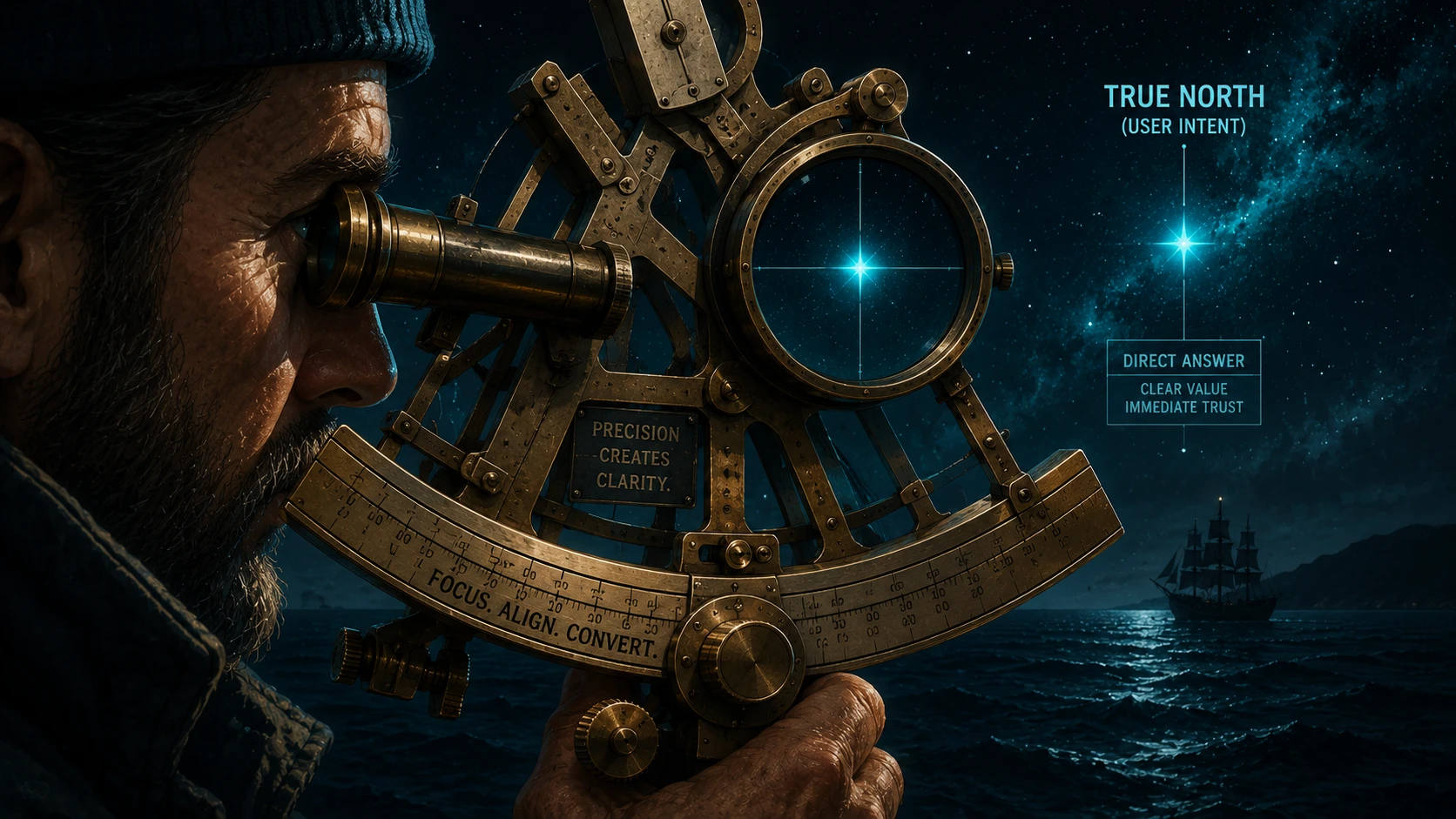
Building a Moat Through Original Data
Perhaps the most overlooked strategy for capturing customers in the AI era is the publication of Original Data. When you conduct your own research, survey your customers, or release industry-specific benchmarks, you become the “Primary Source.”
AI engines are obsessed with attribution. If you are the source of a statistic, every other website that mentions that statistic must cite you. This creates a “Competitive Moat” of authority. When a customer sees your brand cited as the source of the industry standard, the decision to book with you becomes a logical certainty rather than a leap of faith.
At Bittbuzz, we help you identify these “Data Voids”—areas where information is scarce—and fill them with high-quality, original content that search tools feel compelled to quote. For a deeper dive into this strategy, read our guide on The Power of Original Data: Becoming the Primary Source.
Conclusion: The New Standard of Digital Growth
Capturing and booking customers in 2026 is no longer about having the loudest voice; it is about having the most verified authority. By combining the psychological principles of the masters with the technical requirements of the Intelligent Search Interface, you position your business as the only rational choice for your prospects. To close the loop, learn how to connect your automation for smarter search results and start building long-term trust and visibility.
The journey toward total online dominance is a cycle: you get found online, you capture the interest of the prospect, and you book the customer through unwavering proof.
Immediate steps for your conversion strategy:
- Audit your top 5 pages: Do they start with a 40-word self-interest summary?
- Identify one “How-To” guide you can create to demonstrate your process.
- Ensure your CTA is a “Direct Directive” that offers immediate value.
To continue refining your local presence, we recommend exploring our guide on Local Search vs AI Answers. Learn how to work smarter through automated efficiency to scale your growth without scaling your workload. Amplify your reach by using social scheduling to build trust and visibility.