Short answer: a how-to guide is worth writing because it answers one question completely, and because a numbered sequence is easy for a reader to follow and easy for anything summarising your page to reproduce accurately. It is not worth writing for the badge — Google removed how-to rich results in 2023, and any strategy promising one is selling a feature that no longer exists.
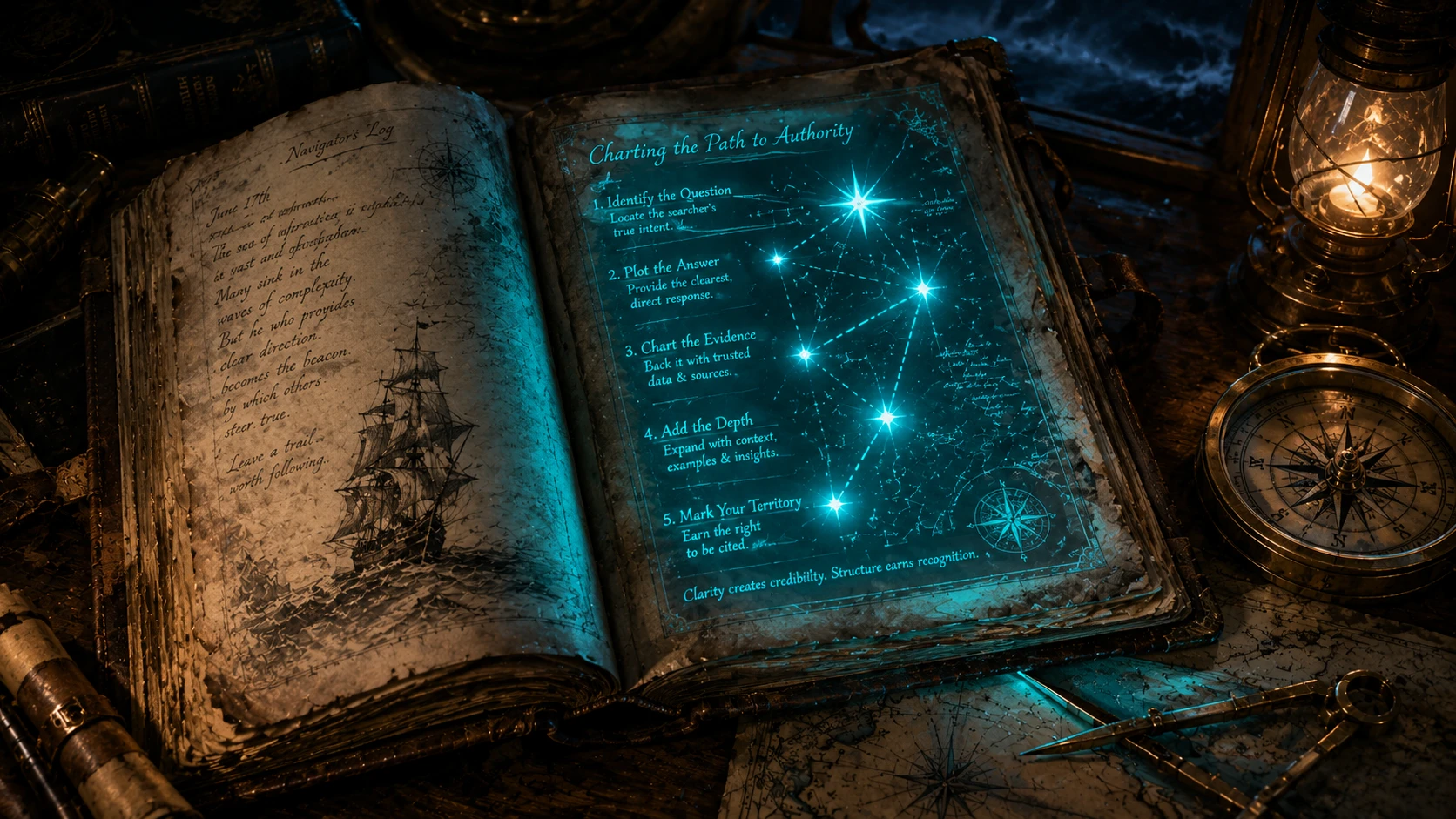
The badge is gone, so start from what remains
Start with the bad news, because it removes an incentive that was driving a lot of bad advice.
In August 2023 Google announced that how-to rich results were being deprecated, alongside a restriction of FAQ rich results to government and health sites. [1] The expanded how-to carousel in search results is not coming back. If your content plan includes “get the how-to badge”, you are optimising for something that was switched off.
What is left is the honest argument, and it is a better one. A guide that fully answers a question is useful to a reader, it earns links from people who found it useful, and it is legible to anything that condenses pages. Google’s helpful-content guidance is really just the same point stated as a standard: does this page help someone with a real question. [4]
Key takeaway: write the guide because it answers the question. Everything else — structure, length, links, the next step — is downstream of that.
Why structured content is easy to summarise
There is no format bonus here. Nobody is scoring your list markers. The reason a numbered sequence works is much more mechanical.
A summary is a compression. When something condenses your page, it is trying to reproduce your argument in a fraction of the space, and it can only do that reliably if your page already contains the compressed version of itself. A numbered list is that. A paragraph that builds to its point over four hundred words has to be understood before it can be shortened, and anything that gets it slightly wrong will get it wrong in a way a list does not.
The same is true of readers on a phone, who scan rather than reading in sequence. [3] One habit, two audiences — and neither of them is a search system being impressed by your formatting.
The three parts of a guide that earns its keep
A specific problem. “How to improve your website” is not a problem. “Why your Google Business Profile is not showing for the searches you care about” is a problem, and it implies a person, a location and a symptom. Guides that name a concrete situation get found, read and finished, and a site organised around the questions people actually ask is a different kind of site from one with thirty unrelated posts. [2]
Steps that are actually specific. This is where most guides collapse into filler. A step that could apply to any business in any trade is padding between two useful ones. Compare:
- Filler: “Review your website content regularly.”
- Specific: “Open each service page and check the price. If it is not on the page, decide whether you are hiding it on purpose — because every version of this page you have ever had assumed it was there.”
The second one can only be written by someone who has looked at the problem. That is the entire value of the format.
What goes wrong. The section readers skip and the one they most need. A guide that only covers the happy path leaves the reader stranded at the first surprise, and the stranded reader is the one who closes the tab and searches for someone else. Include the case where your advice does not apply. Google will happily let you mark up an article and its questions and answers, but whether the answer behind it is any use is a different question. [5]

Publish your method, not your conclusions
The most useful thing you have is not your opinion. It is your process.
Describing what you actually do — what you check first, what you refuse to quote without, what you tell customers when something will not work, how long it takes when nothing goes wrong — is difficult for a competitor to copy, because it is not an opinion any of them disagree with. It is a description of a business.
This is the same argument as original data, from a different direction: the scarce input is what is actually yours. And it is the reason a guide that reveals method tends to increase enquiries rather than reduce them — a reader who can see the judgement involved concludes that delegating it would be sensible.
One practical note on the mechanics. Google lets you mark up an article and the questions it answers, and the documentation sets out what you can declare about both. [5] Worth doing — but it is describing a page that already exists, not creating one, and it will not make a thin guide useful.
Where a guide should end
A how-to page is usually reached by someone with a problem and no intention of buying anything today. Treating it as a sales page converts that reader into a bounce.
End by naming the point where the task stops being worth doing alone, and linking the specific service that covers it. That link should be to the page about the thing you just described, not to a generic contact form — and it should come after the guide has done its job, not before.
Two things worth checking: that the link text describes the destination rather than saying “click here”, since readers and link crawlers both use it; and that the guide is reachable from your service pages, so someone landing there can find the detail.
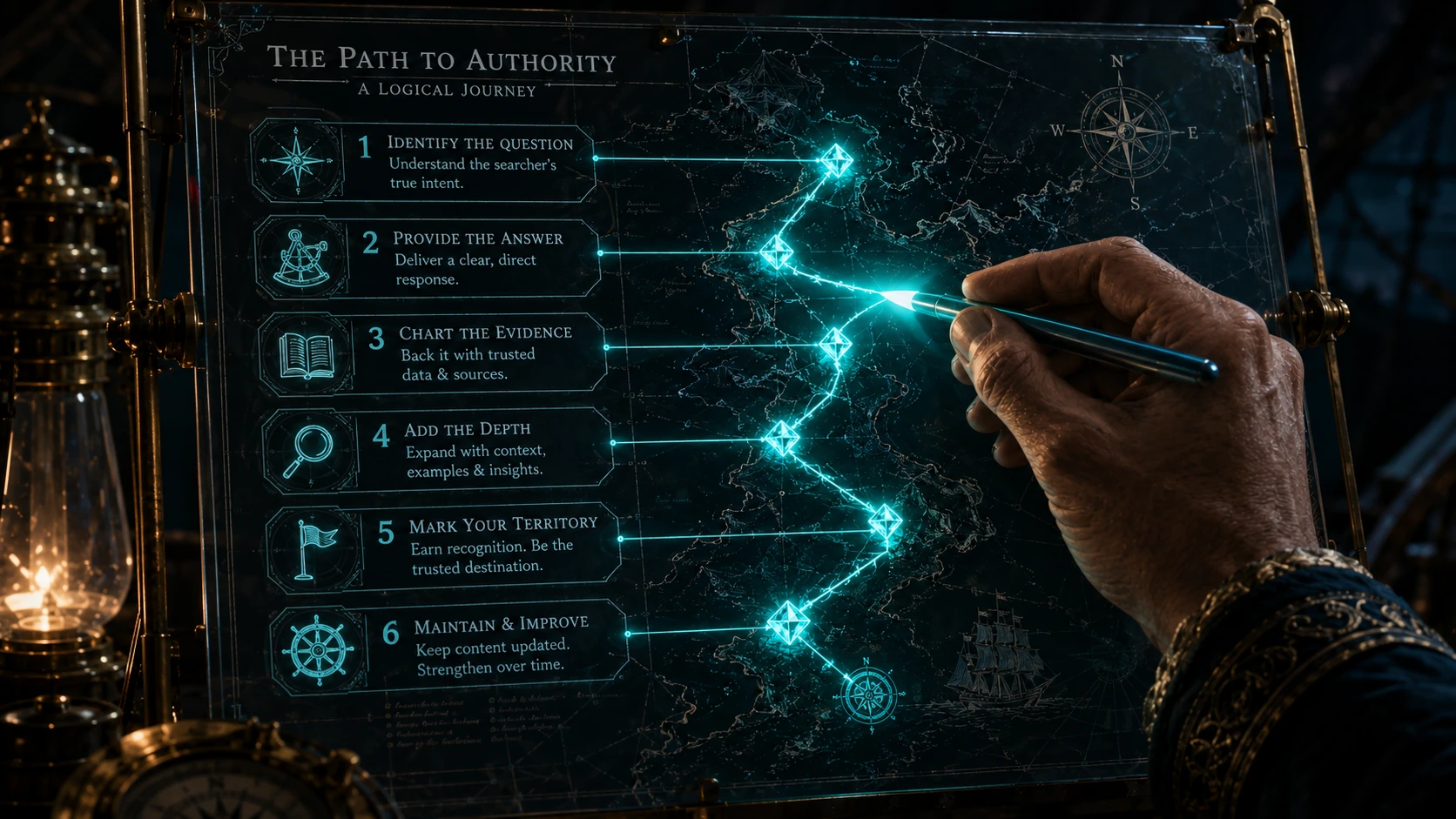
| Guide element | Reader gets | Anything summarising it gets |
|---|---|---|
| Numbered steps | A path they can follow | A sequence it can reproduce |
| Specific instructions | Confidence it will work | Detail that cannot be misread |
| What goes wrong section | A way to self-diagnose | A reason to trust the source |
| Honest boundary | A clear point to stop | An unambiguous claim |
| Link to the service | A next step, when ready | A clean description of what you do |
What to do first
- List the questions your phone gets asked most. Those are your guides.
- Pick the top one and write the version you would send a friend, including what goes wrong.
- Check it against the deprecation announcement and drop any plan you had for a badge.
- Describe one thing you check that most competitors do not. That paragraph is the article’s reason to exist.
- Link it to the relevant service page at the end, from the reader’s point of view.

How this connects
- Original data covers the other way to be uncopyable.
- Headlines that command attention covers the first line of the guide.
- Direct directives covers where the guide sends people.
- Reducing friction covers why shortening the path to the answer matters.